
Why can’t we dig today?
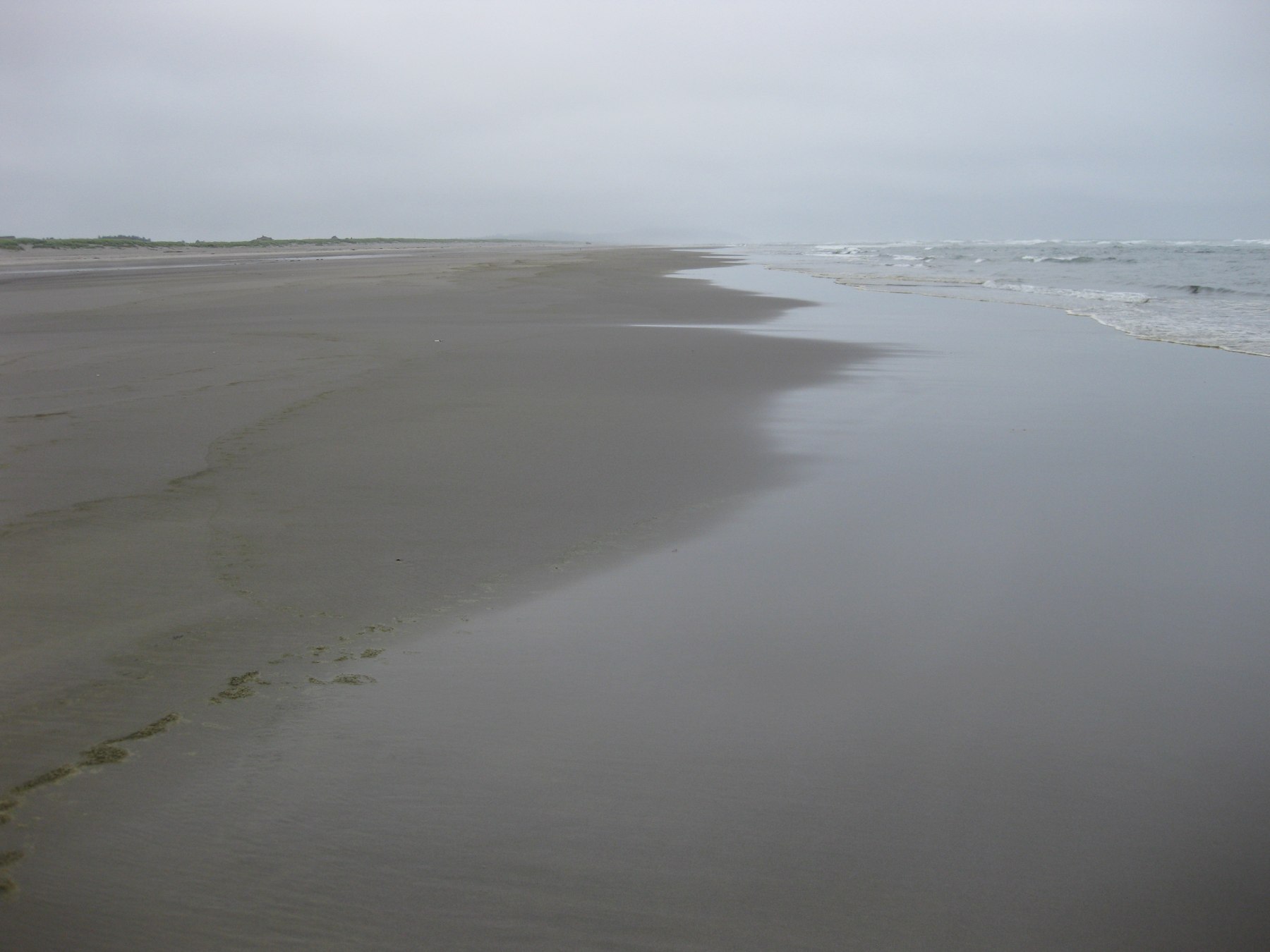
The tide is low. The beach looks beautiful. The clams are there. So why can’t we dig?
Sometimes, naturally occurring toxins in the ocean build up in shellfish and make them unsafe to eat. These toxins are invisible to the naked eye. You cannot tell whether a clam is safe by looking at it, smelling it, or tasting it.
That is why Washington regularly tests razor clams and sometimes postpones scheduled digs. A beautiful beach doesn’t necessarily mean safe shellfish.
This page explains the science. It does not report current beach conditions or authorize harvesting.
A tiny ocean story in three steps
Tiny organisms live in the ocean.
Microscopic algae, called phytoplankton, are a normal and essential part of ocean life. They help feed the marine food web.
Some algae produce toxins.
Under certain conditions, particular species make chemicals that can harm people and animals. Most algae are beneficial. Not all algae make toxins, and not every bloom is harmful.
Shellfish can collect those toxins.
Clams, mussels, and oysters filter seawater for food. When they eat toxin-producing algae, toxins can build up in their tissues. The shellfish may stay alive and look perfectly normal.
Some species can make toxins.
The toxin travels with the algae.
Filter feeding can collect it in tissue.
Eating contaminated shellfish can cause illness.
Meet domoic acid
Domoic acid is a naturally occurring toxin made by certain marine algae, particularly some species of Pseudo-nitzschia. It can accumulate in razor clams and other shellfish.
Eating contaminated shellfish can cause amnesic shellfish poisoning (ASP). “Amnesic” refers to memory loss. The illness can affect both the digestive system and the nervous system.
Symptoms can include nausea, vomiting, diarrhea, headache, and confusion. Severe cases can cause seizures or memory problems and can be life-threatening.
Why do razor clams need special attention?
Razor clams filter large quantities of seawater as they feed. They can collect domoic acid and hold onto it for extended periods, sometimes long after the algae responsible are no longer abundant.
So the water can look normal and the algae can become less abundant while the clams still contain unsafe amounts of toxin.
Reopening depends on actual clam testing. A clear ocean, improved weather, or a certain number of days passing cannot tell us when it is safe to dig.
CAN I COOK THE TOXIN OUT?
No. Cooking Won’t Make Contaminated Clams Safe.
Domoic acid withstands enough heat that normal cooking does not reliably eliminate the danger. Freezing, smoking, drying, and ordinary cleaning are not reliable ways to make contaminated shellfish safe either.
Only harvest razor clams when WDFW has officially authorized digging for your beach and date, with public health testing supporting the opening.
Three names you might hear
Paralytic Shellfish Poisoning
PSP: Caused by toxins that interfere with nerve function. In severe cases, they can stop a person from breathing.
Diarrhetic Shellfish Poisoning
DSP: Caused by toxins that mainly affect the digestive system, causing diarrhea and other stomach illness.
Amnesic Shellfish Poisoning
ASP: Associated with domoic acid. It can affect memory and other nervous-system functions, as well as cause digestive illness.
Different beaches and shellfish species can have different risks and restrictions. A WDFW razor-clam opening does not authorize harvesting oysters, mussels, or other shellfish. Check the rules and DOH safety information for the species and place you plan to harvest.
From a sample to a safe digging decision
Scientists collect samples.
Razor clams are sampled from coastal beaches.
Laboratories test them.
Samples are analyzed for marine toxins.
Health officials evaluate the results.
The Washington Department of Health determines whether applicable safety standards are met.
WDFW announces digging opportunities.
Openings depend on public health clearance and other fishery management requirements.
Visitors check before leaving home.
Digging is permitted only when the beach and date are officially open. Check the authorized hours and rules, too.
WDFW’s current guidance says DOH requires two qualifying test samples taken seven to 10 days apart, with domoic acid below the guideline level, before a beach can open. This sampling interval is not a promised recovery time.
Testing results alone do not automatically open a beach. WDFW must officially authorize the dig.
Source: WDFW razor clam seasons and beaches. Guidance verified October 8, 2026.
Can I tell whether a clam is safe?
MYTH
If the water looks clear, the clams are safe.
FACT
Marine toxins can be present without visible changes to the water.
MYTH
Cooking or freezing kills the toxin.
FACT
Normal cooking and freezing do not reliably remove marine biotoxins.
MYTH
If the clams are alive, they must be safe.
FACT
Contaminated shellfish may look and behave normally.
MYTH
If Oregon beaches are closed, Washington beaches must also be closed.
FACT
Oregon and Washington conduct their own monitoring and issue separate harvesting decisions.
MYTH
Once toxin levels fall, the beach automatically opens.
FACT
WDFW must announce an authorized opening for the beach and date.
Learn More From the Experts
Washington DOH provides public health guidance. WDFW authorizes razor-clam openings. NOAA helps explain the ocean science.
- Washington DOH: Marine biotoxins
- Washington DOH: Domoic acid in razor clams
- Washington DOH: Amnesic shellfish poisoning
- Washington DOH: Shellfish Safety Map
- WDFW: Official razor-clam seasons and beaches
- WDFW: Domoic acid
- NOAA: Are all algal blooms harmful?
- NOAA: Monitoring domoic acid in Washington
Educational content verified against official resources on October 8, 2026. For current status, return to the Clam Report and confirm with WDFW.