46 WILD / LOCAL KNOWLEDGE
What’s That Out in the Bay?
Those rows, floats and little boats are clues. Here’s how to look at Willapa Bay and start seeing the work behind the view.
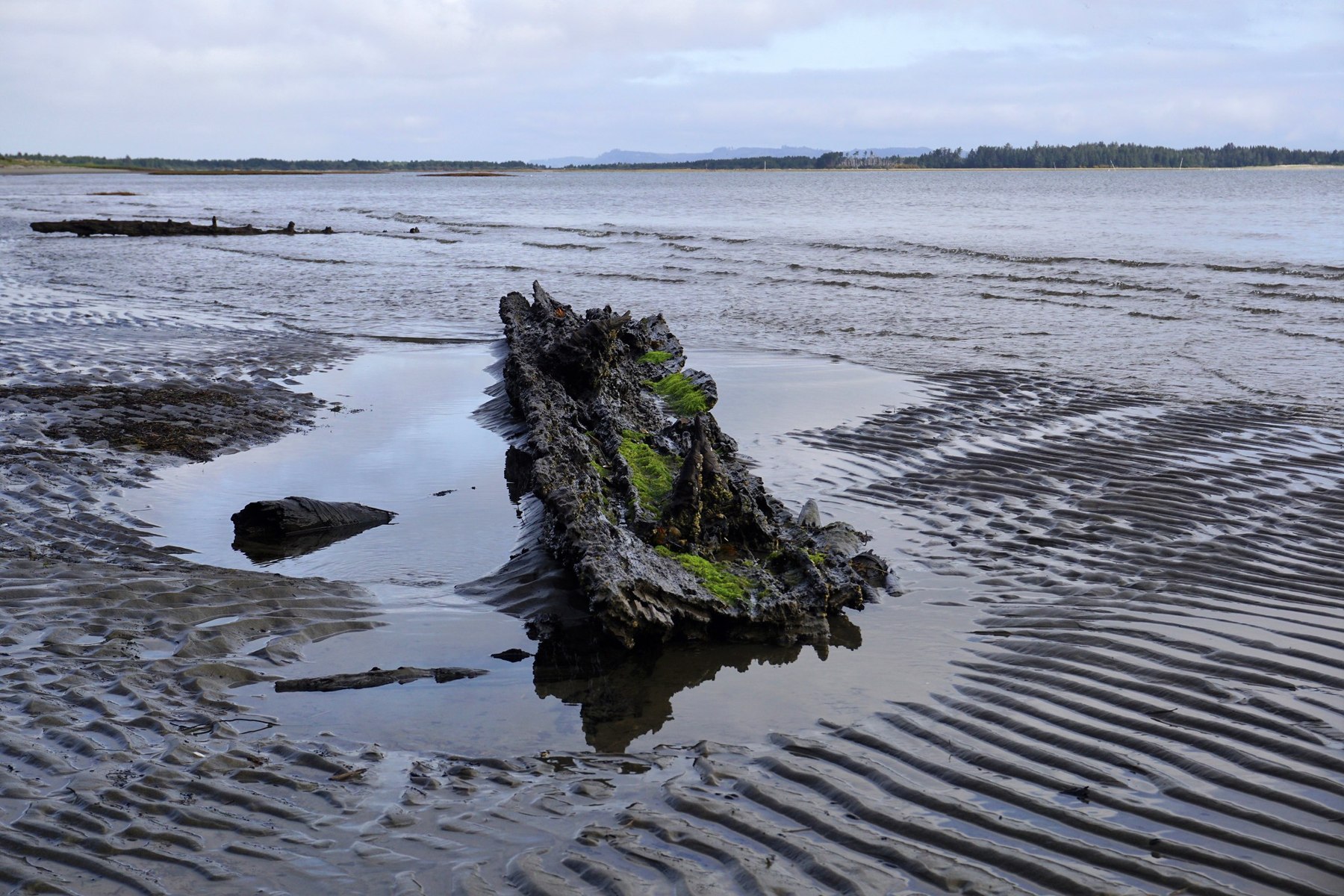
Start with what the water reveals
At high water, the bay can look like one broad sheet of silver. When the water retreats, channels, flats and the outlines of working ground appear. The scene changes; the work carries on.
Look from a public viewpoint in Oysterville or around Nahcotta. Before trying to name everything, ask: does it float, stand above the bottom, or follow a channel?
Rows of baskets or bags
You may be looking at shellfish-growing gear. Mesh containers hold oysters while water moves through them. Growers sort and redistribute oysters as they grow. Different farms use different equipment; a distant row alone won’t tell you whose farm it is.
See how Willapa Wild raises oystersA boat with room to work
A broad, open deck is useful when a crew needs to carry shellfish, baskets and equipment. Watch what happens aboard rather than guessing from the hull: are people moving containers, handling lines or traveling between work sites?
Poles, floats and markers
These can mark navigation, boundaries, moorings or gear. They are working equipment, not invitations to tie up or enter. Their meaning depends on the marker and location; don’t use this guide for navigation.
Dark patches and winding water
Some patches are vegetation, some are shell or exposed sediment. A winding strip of water may be a tidal channel. Try watching the same view twice, at different tide stages, before deciding what you see.
The bay is habitat, too
The Willapa refuge protects a mosaic of tidal flats, wetlands, forest and coastal habitats. Look along the water’s edge for feeding birds. The flats that look empty from a car window are part of a living landscape.
A small challenge for your next stop
Find one thing that moves with the tide, one thing people put there, and one thing a bird is using. You’ve already started reading the bay.
Follow the story
- Willapa Wild: raising oysters
- Willapa National Wildlife Refuge
- Port of Peninsula: the history behind Nahcotta’s working waterfront
Sources checked October 14, 2026. Check operators’ websites for current access, hours and booking.